
It’s very important to know how serious caravan hitch safety is for a fun, worry-free trip. Different trailers need different towing packages, based on how much they weigh when loaded1. So, it’s not smart to think one towing method works for all.
Choosing the right tow vehicle and hitch system is key. They must match your caravan’s full weight, not just its empty weight1. Knowing your caravan’s exact needs is crucial. This includes following state rules for brakes and safety chains on heavier trailers1.
Adding hitch security tips to your checks before leaving boosts your safety. When your trailer is securely attached, you’re free to enjoy the journey and make happy memories.
An Overview of Caravan Hitch Safety
Keeping your caravan safe starts with the right hitch locks and anti-theft measures. Your caravan’s noseweight should be ideally 5-7% of its loaded weight2. This helps balance the weight correctly to lower accident risks and improve control. It’s crucial for all caravan owners to use safety products like breakaway cables for braked caravans and safety chains for trailers under 750kg. These are not just precautions but necessary for road safety2.
Make sure everything inside the caravan is securely tied down before you hit the road2. Even though the maximum speed is 60mph on big roads, driving slower is safer2. For attaching the caravan correctly to your car, ensure the coupling head latches onto the towball tightly, raise the jockey wheel, and secure the steadies2.
- Adjust your mirrors, and use extension mirrors if needed, to see around the caravan2.
- Avoid overloading by sticking to the weight limits. Remember to account for all belongings and essentials2.
- Keep brakes and tires on both the caravan and towing vehicle in top shape. Get brakes professionally inspected2.
The state of your towing gear matters a lot. The hitch weight should be 10-15% of the trailer’s weight for good handling3. Use hitches that spread the load to keep your ride smooth. For heavier trailers, choose stronger vehicles like trucks or vans3.
Knowing and following towing laws keeps you and your caravan safe. If your trailer is over 1500 pounds, you’ll need safety chains and brakeaway switches3. These are key for preventing accidents and ensuring safety during your travels.
| Caravan Specification | Statistical Requirement | Relevance to Safety |
|---|---|---|
| Caravan Noseweight | 5-7% of Loaded Weight2 | Ensures Stability During Travel |
| Breakaway Cables | Required for braked Caravans2 | Stops the Caravan if Detached |
| Safety Chains (Unbraked Trailers) | Mandatory up to 750kg2 | Secondary Coupling in Case of Failure |
| Gross Trailer Mass (GTM) | Total Weight while Towed4 | Determines Towing Vehicle Capacity |
| Payload | Max Weight for Caravan Carry4 | Prevents Overloading |
| Hitch Weight for Travel Trailers | 10-15% of Trailer’s Gross Weight3 | Important for Handling and Control |
| Brake Controllers | Essential for Heavy Caravans4 | Commands Caravan Braking Systems |
Preparing for Departure: Essential Caravan Hitch Checks
Before you hit the road, it’s vital to stick to a detailed caravan hitch maintenance guide. This guide ensures your trip is both fun and safe. A caravan hitch maintenance checklist helps you prepare properly for your journey.
Start with checking tire pressure and making sure wheel nuts are tight. This step keeps you safe on your travels56. Also, check that the coupling socket and the ball size match to avoid connection issues5.
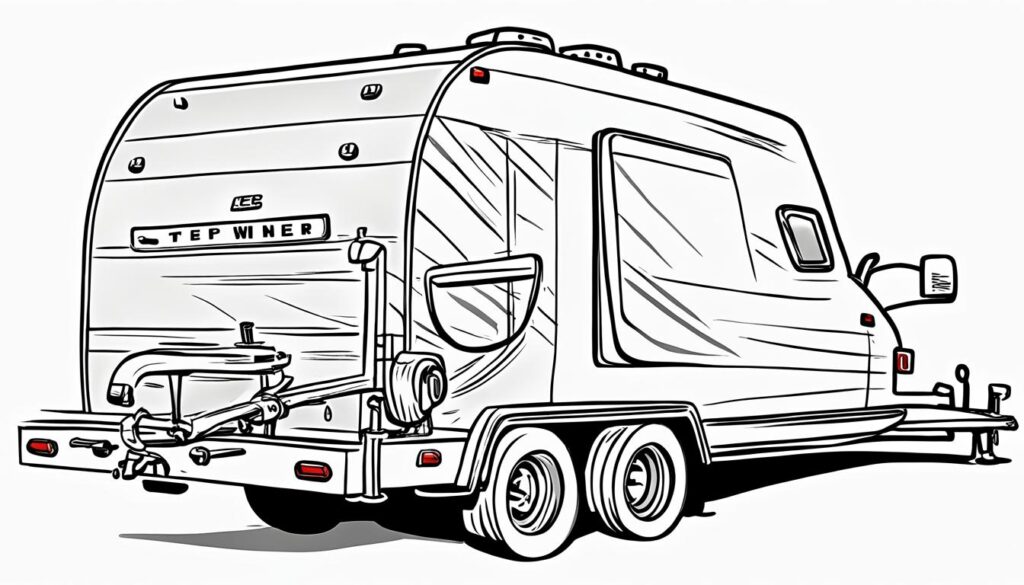
It’s crucial to properly fasten couplings and securely connect safety chains for a strong attachment6. While choosing a secure caravan hitch, consider the towing capacity and follow your vehicle’s guidelines6.
- Ensure the caravan’s loaded mass is within safe towing limits.
- Inspect the hitch welds, safety chains, and snaps regularly for signs of wear or damage6.
- Grease the hitch ball as required to maintain smooth operation and prevent rust6.
- Test the brakes on all caravan axles to confirm full functionality before moving5.
Checking your trailer’s lights is key for safe travel. Make sure all lights work to signal properly to other drivers5. Practicing how to back up your caravan boosts your confidence and skills5.
Use these tips to ensure your caravan hitch is ready for adventure. With careful preparation, you’ll be ready for a secure journey.
Maintaining Your Caravan Hitch: A Comprehensive Guide
It’s crucial to keep an eye on your caravan’s hitch system. Caravan hitch safety helps avoid accidents and ensures safe travel. Make sure the hitch weight is at least 10% of your trailer’s total weight.
This helps with stable handling. Sometimes, increasing this to 15% is better for smoother driving. This ensures you can steer and control your caravan easily.
If you’re using a load-distributing hitch, check it’s strong enough. It should handle the hitch weight plus an extra 10% for safety. The strongest of these hitches can support up to 1200 pounds. But this might be too much for your car’s suspension. So, always check your car’s ability to handle this.
For fifth-wheel trailers, your hitch needs to handle about 20% of the trailer’s weight. Make sure your hitch can support up to 15,000 pounds. Following a caravan hitch care list before you head out can prevent issues.
Safety chains are a must for travel trailers. But fifth-wheel trailers don’t need them. Yet, all trailers over 1500 pounds must have breakaway switches. This important feature kicks in if your trailer detaches, activating its brakes.
Don’t go over your tow vehicle’s Gross Vehicle Weight Rating (GVWR). This includes the car’s weight, what you’re carrying, and the hitch weight. Staying within these limits keeps you safe on the road. Regular upkeep protects your trips and keeps your gear lasting longer.
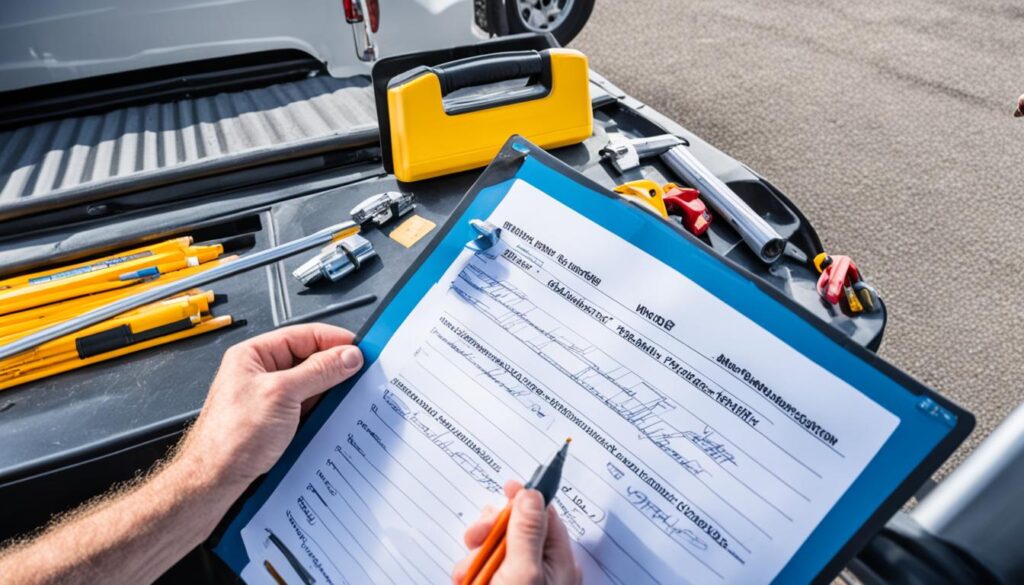
- Check hitch weight against trailer’s gross weight for proper handling3
- Ensure load-distributing hitch is rated for hitch weight plus a 10% safety margin3
- Confirm fifth-wheel trailer hitch can handle 20% of the trailer weight3
- Include safety chains for travel trailers and breakaway switches as required3
- Verify tow vehicle’s GVWR is not exceeded when loaded3
By following these steps in our caravan hitch care guide, you’re setting up for a trouble-free adventure. This care checklist is key to keeping your caravan safe on the road.
On-the-Road Caravan Hitch Security Tips
Keeping your caravan hitch safe is important, especially on the road. About 1,400 caravans get stolen every year7. Most are taken from driveways or places that are not secure7. To lower the risk, check your brakes often8 and use strong steel locks for your hitch7. It’s crucial to pick security options that fit your vehicle well. For example, a good Tracker system can help police find your caravan quickly if it’s stolen7.
Don’t forget simple things like checking your tyres often and keeping them in good shape8. These steps are key for controlling your caravan and keeping it stable8. If your caravan is loaded wrong or unevenly, it might lean back too much. This can make it sway dangerously and hard to handle8. To keep things safe and driving well, look for tips on how to tow safely. You can find useful info in articles or ask experts about loading right, spreading weight evenly, and other helpful hitch maintenance advice8.
It’s super important to use theft prevention methods for your caravan hitch. Adding security posts, special UV markings7, and registering with CRIS adds extra safety7. Caravan trips are meant for fun outdoors. Making sure you’re secure and safe helps make your journey enjoyable and free from worries.
Source Links
- https://dmna.ny.gov/nynm/training/NHTSA_TowingSafety.pdf
- https://www.campingandcaravanningclub.co.uk/advice/equipment/towing-safe-for-the-road/
- https://www.dmv.ca.gov/portal/handbook/recreational-vehicles-and-trailers-handbook-2011/towing-your-trailer-safely/
- https://outcamp.com.au/blogs/news/guide-to-caravan-towing-safety
- https://cudapowersports.com/blogs/news/how-to-back-up-a-boat-trailer
- https://nasdonline.org/1043/d000842/horse-trailer-maintenance-and-trailering-safety.html
- https://www.inspiredcamping.com/caravan-security/
- https://www.lifesure.co.uk/articles/navigating-the-road-safely-avoiding-common-towing-mistakes